President, Strategic Communications, LLC


Tuesday, August 28, 2012

Will FDA Preempt Prop 37 and the Dance of Legislation?

In our crazy quilt of food law, pepperoni pizza is regulated by the USDA and cheese pizza is regulated by the FDA. Food labeling requirements promulgated by the USDA preempt all state labeling on meat products, since the Federal Meat Act contains explicit preemption language. Not so, for the Federal Food Drug and Cosmetic Act, although many food law experts believe FDA has implicit authority to preempt state labeling requirements that the Agency believes is not in the public's best interest.

California voters this November will cast a ballot on whether foods containing GMO ingredients should bear a consumer warning, the equivalent of a skull and cross bones, notwithstanding that every public health agency in the world have found these foods to be safe. And, in Europe and in other countries where labeling is required, the politicians and regulators will tell you the decision to label had nothing to do with science but everything to do with the power of the "Green" political movement. Fear of political retaliation, not science forced the decision.


Since 1986 California has been the chief cause of concern about preemption and the chief stumbling block for food industry attempts to have Democratic and Republican Administrations' FDAs create a uniform market for labeling.

Despite the law and practice, the reason why we do not have one uniform national market is the simple political truth -- California has too many electoral votes to mess with.

So, the scientific community, the activists in California and the food industry have been performing a "who will blink first" ballet for years. Each side has honed their skills through endless litigation, rehearsals and intense lobbying.

One example of this foolishness involved the birth defect warning required under Proposition 65, the so-called Consumer Warning Initiative, passed in 1986, which required the state of California to warn consumers of "chemicals known to the state to cause cancer or birth defects." The warnings would be on product labeling and be a figurative skull and cross bones.

In its review of chemcials, the Proposition 65 Scientific Advisory Board (SAB) came across Vitamin A. To make a long story short, it turned out the amount of Vitamin A added to milk sold to school children would have triggered a birth defect warning. Now, this raised a huge problem and the ballet started.

At the end of Act II, the SAB did not want to look like fools to their peers and they were loathe to list Vitamin A but the law is demanding. The dairy industry was aghast, to say the least. The FDA  made it clear it would be very unhappy. Legislation began to move in Congress to preempt the Proposition.

Then, near the end of the production, it dawned on the activists that they may have created a monster, one which will devour them. Federal preemption would kill the California law. As deadlines inched closer, as both sides looked over the precipice, a solution appeared -- the activists agreed to be quiet if Vitamin A magically disappeared from its birth defect warnings list. Presto, chango, Vitamin A was gone. Both sides shifted from warp speed to impulse power.

Then a few years later, FDA was confronted with a similar challenge. This time from rBST, a natural hormone which allows milking cows to produce more milk. Milk produced with rBST is identical in every was to milk produced without rBST. There is no laboratory test that can distinguish between the milk. Ben and Jerry were appalled. Small dairy states besieged the FDA with plans to label milk produced with cows not taking rBST. FDA, as always, took the petitions under advisement.

Lots of time passed. Legislation was introduced, the orchestra began to play the overture and then in a stroke of biblical genius, FDA arrived at a solution. It cut the baby in half, just like King Solomon. It allowed the dairies that did not use rBST to make a factual statement that they did not use it but, the Agency required that a new sentence, a science based disclosure that said, "it didn't matter."
So, today, for example, Special Request Skim Plus milk marketed by Farmland Dairies in Wallington, NJ carries a side panel declaration stating:
*Delicious 100% real milk [as opposed to unreal milk] produced from cows not treated with rBST. The FDA has found no significant difference from milk derived from rBST treated cows and those not treated."

The orchestra stopped.

If President Obama wins reelection and Prop 37 passes, the food industry may once again strike up the tune. FDA will be reluctant, as always, to act, but with GMOs in 80% of processed food they really will not have much of a choice? Perhaps King Solomon will be called on again.

However, now may be the best time since 1986 for the food industry to strike. With the "Knuckle Draggers" as Speaker John Boehner (R-OH) fondly calls his Tea Party Caucus, firmly in control of the House, preemption legislation could zip ripe through. The GOP Leader in the Senate would jump at the chance to give FDA and the Obama Administration more problems that either one of them need. Of yes, California Sen. Barbara Boxer will scream, but who cares -- California's electoral votes will not be in play for three years.

If Gov. Romney gets elected, an order to FDA to preempt is certainly possible.
______________

In the spirit of transparency, I do not have a dog in this fight - yet.


Thursday, August 23, 2012

Is Nutrition Information Only for the Elites?


In 1990 when the late US Sen. Ted Kennedy (D-MA) and his GOP BFF, Sen. Orrin Hatch (UT), began marking up the Nutrition Labeling and Education Act everyone in the Senate Labor and Human Resources Committee room knew food labeling was about to change, with a new "Nutrition Facts" box. It had taken years to lobby and iron out the details. Everyone also knew there would be no sustained effort to educate the public about what information was on the box, despite the title of the law.
Then the federal government got into the information and education business. Soon we had the Food Guide Pyramid and then a revised version, which was supposed to help educate and inform consumers about the nutritional content of the food they were eating.

The most recent set of Dietary Guidelines effectively recalled the crumbling Pyramid and introduced us to the "My Plate" program, where consumers are supposed to fill half their plates with fruits and veggies, a tough thing to do when most consumers have no idea that a potato is a vegetable, much less one packed with potassium (and why is that important?) But, before the ink was dry on the feds new plan, the ivory tower folks at Harvard released had their own different plan and stole most of the media attention. Lesson: power brands, like Harvard, trump federal science.

Now, everyone is fighting about front panel labeling. In a bold tactical move, food manufacturers and retailers unveiled their own proposed plan and voluntarily began to use it, setting FDA and the "Big Food" critics back on their heels. Not to be outdone, the food fundamentalists, the "food police," or the so-called Center for Science in the Public Interest have issued their own color coded, traffic light proposal, which has the proverbial snowball chance in Hell of being adopted. The one thing they all have in common is that they are all different.
The result of 20 years of all this activity -- the nation is more obese than ever.

So now, the "you are too dumb to know what to eat people, the experts and academics" are taking their whack at the issue, hoping simple "tax and forbid" government solutions will solve a complex problem.

Specifically, New York Mayor Michael Bloomberg wants to ban "bad" large soft drinks sold in city restaurants, stadiums and movie theaters, but on August 22 The New York Times (NYT) released a poll of New Yorkers, regarding Mayor Bloomberg’s plan. A whopping 60% were against it. The reaction by the politically appointed head of the city's health department basically was, "We know what's good for you," and said he expected the proposal to be adopted in about three weeks. So much for the messy business of democracy. NYC soda drinkers will just buy two cups of soda, instead of one large one.

Just a few days earlier, in an interview with CBS News about the Administration's new school lunch reform initiative, Kevin Concannon, who is in charge of the school lunch program at USDA, said: "The industry, I think, had a lot of anxiety about this. That's the kindest thing I can say about that." "The kindest thing?" Give me a break. In effect, he washed his purest hands of the politics that his Department was supposed to manage. Congress stepped in and gave every side a bit of what they wanted, something Washington once called a "compromise," before Speaker Boehner's "knuckle draggers," as he affectionately calls the Tea Partyers of his caucus, came to town.

This November California consumers will be voting on Prop 37, an initiative, that if passed, would require food that contains GMO ingredients to be labeled, despite the fact that for nearly 20 years every public health organization in the world have found GMO foods to be safe. FDA firmly believes a warning that 80% of the food supply contains GMOs would be a warning on nothing and would imply non-GMO foods were safer or more nutritious, something that is absolutely wrong and illegal under the Federal Food, Drug and Cosmetic Act.

So what do consumers want to know about their food? No no surprise, consumer polling and focus group results have not changed in many years. According to the International Food Information Council's (IFIC) 2012 Food and Health Survey, taste is number one. Ever try one of the very low fat cheese products. Yuck! I vote for Julia Child and please pass the butter. Price is number two and healthfulness comes in third.

The IFIC data reveals most consumers find it easier to figure out their tax return than it is to figure out what they should and shouldn’t eat to be healthier. No surprise there either.


Declaration of Independence

Most importantly, consumers do not want to be told what or what not to eat and they certainly do not want government making those decisions for them and their families, something to do with a strong belief in the right to "Life, Liberty and the pursuit of Happiness" as spelled out by the Declaration of Independence, I guess.

My RD friends continue to tell me people cannot be coerced or taxed into compliance. They have to want to make a major change in their life and it is a tough, life-long fight. Why are they not being heard by policy makers?


So, where are we? Obesity, diabetes and heart disease are at epidemic rates. Consumers are interested in health but understandably confused. Manufacturers are touting health benefits of a wide range of ingredients in advertising and activist groups do not want food companies to advertise anything but broccoli to kids.

In the meantime, the experts will argue policy with each other and the academics will talk about the latest NHANES study to each other. Consumers are on their own.


Wednesday, August 15, 2012

Competitive Foods and Obesity - Be Very Careful

Mix funding from the Robert Wood Johnson Charitable Trust with the branding of Harvard and you have a recipe for making news from scratch, no added sugars here. So it is not surprising that a new pediatric obesity study shows that laws strictly curbing school sales of  so-called junk food and sweetened drinks may [emphasis added] play a role in slowing childhood obesity received wide coverage across the country.

The Associated Press (AP) coverage, which most papers across the country used, noted, "even obesity experts who praised the study acknowledge the measures are a political hot potato, smacking of a 'nanny state' and opposed by industry and cash-strapped schools relying on food processors' money. Buried deep down in the AP copy, perhaps by an editor, is the one paragraph of "balance" provided by Boston University statistician Mark Glickman who said, "the study design makes it difficult to reach any convincing conclusions.


What bothers me is that Lindsey Tanner, a very good AP medical writer based in Chicago, goes out and rounds up the usual food critics for comment. Dr. David Lustig is quoted as saying, "if the laws have even a tiny effect, 'what are the downsides of improving the food environment for children today?' He concluded, "The challenge is that there are a great many factors that coalesce to influence body weight. Disentangling these influences and looking at the independent effects of just one is a methodological nightmare." Then Dr. Virginia Stallings adds her two-cents worth, "This is the first real evidence that the laws are likely to have an impact." Stallings, an out-spoken industry critic,  chaired an Institute of Medicine panel that urged standards for making snack foods and drinks sold in schools more healthful.

On the merits of the issue, the children in the study gained less weight from fifth through eighth grades if they lived in states with strong, consistent laws versus no laws governing snacks available in schools. For example, kids who were 5 feet tall and 100 pounds gained on average 2.2 fewer pounds if they lived in states with strong laws in the three years studied. Also, children who were overweight or obese in fifth grade were more likely to reach a healthy weight by eighth grade if they lived in states with the strongest laws.

Importantly, the effects weren't huge, and the study isn't proof that the laws influenced kids' weight.
If a fraction of the time and money spent on pushing taxes and food bans were applied to nutrition 101 for kids in school, K-12 and the freshman year in college we would make some progress. As my RD friends remind me, you cannot force a person to change what he or she eats. Once they decide to change, then RDs and other health professionals can help. And, yet another study funded by a big charity that shows mix results at best is really not news.


____________________________________
The authors of the study, released online Monday in the journal Pediatrics.


Sunday, August 5, 2012

"Added Sugars," Labeling, Give Me a F------ Break

The presidential election political silly season is upon us and Congress is in recess until after Labor Day.

The USA Olympic Champions are getting covered in tats, the Tea Partyers are having Mark Twain's joke, "No man's life, liberty, or property are safe while the legislature is in session," etched on their foreheads; and, the Democrats continue to hope that Sir Winston Churchill was right was he commented,"It has been said that democracy is the worst form of government except all the others that have been tried."

The country is facing perhaps the most important election since 1968, and what is the the FDA doing, considering whether to require "added sugar" labeling to foods. Give me a break. Oh yes, this news comes on the heals of two major microbiological contamination recalls involving onions and cantaloupes that led food safety experts to cite recent CDC reports that the country is not meeting its goals for reducing food borne illnesses such as salmonella and listeria. Consumer advocates complained that the government has been too slow to implement the Food Safety Modernization Act, which should help prevent food borne illness. The only good news here is that nobody has died, yet.

So, with not enough funds to do its work, with a House of Representatives, axe in hand, prepared to slash FDA dollars, where, you might wonder is the Agency is spending the few resources it has -- to beat the dead horse of "added sugars" again.

The LA Times immediately jumped into the fray with: "Snorre… I mean, Man the Barricades! Put a Stop to This/Get This Done ASAP!"

Let's not let three facts intrude. First, sugar is a required listing in the Nutrition Facts Box. Second, there is general scientific agreement (is that an oxymoron?) that the body does not distinguish one kind of sugar from another -- sugar is sugar is sugar. Sure, honey and pure evaporate cane juice give us a warm and fuzzy feeling compared to HFCS and granulated white sugar, but, metabolically speaking, there is no nutritional difference. And, third, have you ever tried to drink a cup of straight cranberry juice? I tried, and I could not do it, way too tart for me and most consumers which is why the industry sweetens the drink with other, cheaper sugars. Apple juice, Mother Nature's junk food, is a popular choice. Take off the peel and all you have is sugar and a modicum of vitamins.

When HFCS began, to borrow another DC phrase, "to twist slowly in the wind," smart companies found more consumer friendly alternatives, even if they did not meet the strict standard of identity established by the FDA for sugar. Cane juice consumption jumped and some companies actually advertised "contains real sugar" as opposed the sugar that comes from a factory of corn going in one end, lots of pipes and syrup coming out the other end.

Just for the record, the last two rounds of Dietary Guidelines (DG) declined to recommend the "added sugar" approach. Oh sure, the DG panel was dominated by industry and despite the East Wing of the White House's  Let's Move campaign, big, bad industry won. Which brings us back to why the food fundamentalists are trying to end run the DG process and have FDA change the regulations.

FDA is a risk adverse, deliberative Agency, to say the least. They should carefully and painstakingly review the comments and then stick them in a place where the sun does not shine, in a backroom storage facility with no windows.

After all it is excessive calories people consume from a wide variety of foods, just not sugar that provides the risk factor for obesity, CVD and diabetes. Brownell and his usual suspects know, if you consume more calories than you expend, you will put on weight. Perhaps, that is where they ought to focus their personal efforts and let FDA worry about the really important stuff, like surviving.


Friday, July 27, 2012

When the Circus Came to NYC


This week the New York City Board of Health conducted a public hearing on Mayor Michael Bloomberg’s proposed so-called “soda ban." To paraphrase one of the more famous lines from Casablanca, the Mayor's office went out and "rounded up the usual suspects." A handful of consumers spoke. Mostly it was a spattering of elected officials and lobbyists on both sides of the issues. You know the ones - the media ego maniac, the sky is falling, Michael Jacobson and the ivory tower sky is following, but we do not need more study because we have no idea whether this will actually reduce total caloric intake, Kelly Brownell. There message was simple, "Don't confuse me with the facts because my mind is already made up.

Ladies and gentleman, children of all ages, let me direct your attention to the center ring where we are going to conduct the greatest show on earth -- a public hearing about the role of soft drinks in the diet in the nation's largest city with many "experts" and very few public participants.


Only 100 people attended, most of them reporters, who after making the trek to Long Island City, felt obliged to file a no news story.

No new information or evidence was presented. Each side rehashed the same old arguments. The hearing will not likely change the expected approval of Mayor Bloomberg’s proposal, which will limit the size of non-alcoholic beverages sold at restaurants, movie theaters, delis, stadiums, arenas and mobile food cars to 16 ounces. The Board of Health — 11 physicians, public health experts and scientists and the health commissioner — are all mayoral appointees.

One pro-industry group said something to the effect that the deck was stacked which reminded me of Captain Renault's famous quote, again from Casablanca, that :" I'm shocked to find that gambling is going on in here [Rick's Cafe]!" -  after receiving his share of the evenings earnings. Shocked indeed.

In politics, there is a golden rule -- he who has the gold makes the rules. And this was the Mayor's sandbox. The board will formally vote on the plan in September. If approved, it will take effect in March 2013.


Sunday, July 22, 2012

Will the Luddites Win on GMO Food?

Luddite - Lud-dite (noun) - an opponent of technological or industrial change.

Just about very leap forward in food science and food safety during the last century has been opposed for some reason or the other, mostly from fear of the unknown, some from not so enlightened self-interest and others from ignorance, so it comes as no surprise that genetically modified (GM) foods are under attack.

Let's look at some examples of other "new" food technologies, because early opposition to these technologies raised the same issues we are debating today and they share a common conclusion, they were wrong.

SWIFT and ARMOUR
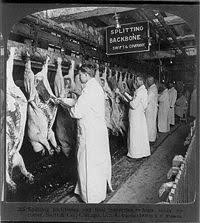
When the Civil War broke out America was mainly an agrarian society. The Union army quickly turned to the food industry for help in feeding the troops. The results were mixed. As the saying goes, "Swift and Armour (the two giant Chicago meat packing companies) killed more Union soldiers than all the Confederates." The Union forces died from rotten meat packed in cans sealed with lead. If the bacteria filled meat did not kill the soldiers, many died a slow and painful death from lead poisoning.

The unsanitary conditions persisted into the 1900s until publication of The Jungle which prompted an outraged President Theodore Roosevelt to move with sweeping reform legislation.

PASTEURIZATION
In the 1880s something as simple as pasteurization was vehemently opposed. Pasteur did not discover microorganisms. He made the immensely important observation that they were not a consequence of disease, decay, and putrefaction—as was the common scientific opinion at the time—but were, in fact,
he causes of these problems, and that eliminating them could eliminate the problem. This knowledge led to revolutionary changes in medicine and food preservation, not the least of which was the understanding that relatively mild heating kills microorganisms and substantially improves the safety and quality of foods without destroying desirable nutritional and sensory characteristics.

As a good Frenchman, he applied his discovery to the preservation of that most important beverage: wine. In order to “prove” the effectiveness of his process, Pasteur shipped a cargo of pasteurized wine around the world in 1868 on the French frigate, La Sybile, “without spoilage of a single bottle.”

Nevertheless, It took almost 30 more years for pasteurization to become the norm in food processing.

Frozen Foods
Ever since man began to throw meat into the snow from the cave in order to preserve it, we have been using frozen foods. However, beginning in 1929, Clarence Birdseye, a well-known taxidermist, offered his quick-frozen foods to the public. Birdseye got the idea during fur-trapping expeditions to Labrador in 1912 and 1916, where he saw the natives use freezing to preserve foods. Modern attempts at refrigeration began in the early 20th century in the meat packing industry. The first quick-frozen vegetables, fruits, sea foods, and meat were sold to the public for the first time in 1930 in Springfield, Massachusetts, under the trade name Birds Eye Frosted Foods®. Other experiments, involving orange juice, ice cream and vegetables were conducted by the military near the end of World War II.

Eighty-three years after Birdseye first introduced product into the consumer marketplace, critics still complain about the quality, composition and nutrition of frozen foods but the public has spoken and industry has responded with ever changing products produced from from Fortune 50 food companies to the all organic crowd.

GMOS: AMA and AND

Fear is the powerful motivator and the verbal and minds- eye image of "Frankenfood," certainly gives one reason to pause and hope that all the right people are asking all the right questions about the introduction of this technology into the marketplace in forms that go beyond major crops such as corn and soybeans.

Labeling is a hot-button issue. Currently, there's no federal requirement to label, because FDA has declared the GM foods identical, in nutrition and safety, to their non-GMO cousins. FDA argues reasonably there is no need to label a safe product.

Opponents point out that consumers increasingly feel they have a right to know what is in the food they eat-particularly when it comes to GMO. In a 2012 survey by the consumer research company The Mellman Group, 91 percent favored labeling.

The industry has polled consumers intensively on labeling issues since the Nutrition Facts Box first appeared. This vast body of research tells us that consumers, when asked, want every imaginable type of information on front panel packaging, from country of origin to multiple breakdowns of fat. Whether consumers understand what they are asking for is another question. Most consumers cannot tell the difference of a poly unsaturated fat to an omega 3 product, much less the complexities of grams and percent of daily values of the current Nutrition Facts Box. Most consumers cannot tell you a potato is a vegetable, much less one that is loaded with potassium and dietary fiber, two "nutrients of concern," according to top federal health policy makers. Just ask your nearest Registered Dietitian.

Today, About 80 percent of the major crops come from GM seeds, so a warning on just about every food that contains this genetic material equals a warning about nothing, especially when one cannot distinguish the GM product from the natural product.

The risk avoidance FDA has taken forever, as it usually does, to review GM foods in the scientific pipeline such as a GM salmon. We are going to have to wait longer for a decision. It's an election year and the Obama Administration does not want a GM decision clouding its presidential messaging. There are no votes for the Obama Administration if it approves a GM fish this year.

On the merits of the science, in mid July, the American Medical Association announced in a statement that they saw no health purpose for labeling genetically modified foods -- those made with GMOs (or genetically modified organisms) -- as such.

AMA underscored, "There is no scientific justification for special labeling of bioengineered foods, as a class, and that voluntary labeling is without value unless it is accompanied by focused consumer education. . .We also urge the FDA to remain alert to new data on the health consequences of bioengineered foods," AMA board member Dr. Patrice Harris.


However, the AMA, inserted a "poison pill" into its statement. The organization went on to recommend mandatory pre-market safety testing with the FDA for any modified food. No other issue, except the freedom to advertise its products to the public, is nearer to the heart of the food industry. In the past, it has "gone to the mattresses" to avoid pre-market approval of foods. Currently, companies "consult" with the FDA since no one wants the Agency to issue a warning letter about their product after they have spent tens of millions to produce and launch it.

In 2006 the American Dietetic Association, now the Academy of Nutrition and Dietetics, issued a policy statement that agricultural and food biotechnology techniques can enhance the quality, safety, nutritional value, and variety of food available for human consumption and increase the efficiency of food production, food processing, food distribution, and environmental and waste management. The American Dietetic Association "encourages the government, food manufacturers, food commodity groups, and qualified food and nutrition professionals to work together to inform consumers about this new technology and encourage the availability of these products in the marketplace." Great.

Nearly a decade ago, in 2004 an investigation from the National Academy of Sciences into the relative regulation and safety testing of genetically modified and conventional foods found that either method can result in problems like food allergens and pathogens. “All foods, whether or not they are genetically engineered, carry potentially hazardous substances or pathogenic microbes and must be properly and prudently assessed to ensure a reasonable degree of safety," read the report.
What's Next?
So what do we do? Do we wait, like Pasteur, for thirty years to pass before accepting GM foods into our homes?

California, which likes to set its own food and environmental policies and then force the FDA and the food industry to meet its standards since it has the largest consumer market in the country, may go its own way. There is a Proposition on the November ballot that would require labeling of GM foods.

Obviously the industry is spending a fortune to defeat the measure, but as in so many food controversies since 1986, as California goes, so goes the nation.


Tuesday, July 10, 2012

Mirror Mirror on the Wall, Who Has the Ugliest Food Politics of All?

No worries, Evil Queen. The answer is obvious, the farm bill, despite the fact that each aisle of the supermarket has a symbiotic relationship with lawyers, lobbyists, pr flacks, science spokespeople, activists, demagogues and congressional allies, based on home state or congressional district interest.


The House Farm Bill
 Every five years Congress takes up this political "hot potato," which is neither high in dietary fiber or potassium. Usually a compromise is reached, agricultural members win over the support of the Black Caucus and urban members with enough food and hunger programs to garner enough votes to pass the House of Representatives, even if some of the other major policy items in the legislation make no economic sense. This year it might be different.

Compromise, the mother's milk of politics, is not in the vernacular of the Tea Party. These modern day Luddites want to topple federal programs by starving them to death, much like what the Tea Party in the House proposes to do to millions of hungry school children whose only warm meal of the day may come from federal feeding programs.

According to a July 9 press release from the UCLA Center for Health Policy Research, an estimated 3.8 million California adults — particularly those in households with children, as well as low-income Latinos — could not afford to put adequate food on the table during the recent recession. The House Agriculture Committee's answer - slash $16 billion in more spending from food insecurity programs and reward millionaire farmers with more federal subsidies.

Democratic reaction was swift and predictable. Rep. Rosa DeLauro (Conn.) issued a scathing statement after the bill’s release that called it immoral and inhumane.“This bill increases subsidies to millionaires... This is a bill that robs the poor to pay the rich...No farmer is being cut back. They are being made whole...The people are getting screwed in this process are the people who can least afford it,” she said.

Part of this is all political posturing. The House GOP and Democratic Leaderships know the Senate will never accept these mean spirited cuts. Democratic House Leader Pelosi even hinted publicly something to the effect that "we can fix this bill in conference." Why should she, especially in an election year?

The whole polticial process stinks. Someone needs to teach the bullies in the House a lesson. It's like Sean Connery's famous line from the movie The Untouchables, "You wanna get Capone? Here's how you get him. He pulls a knife, you pull a gun. He sends one of yours to the hospital, you send one of his to the morgue. That's the Chicago way. And that's how you get Capone!" And that is how the Democrats should get the Tea Party.

The House of Representatives needs to understand that a great nation is judged by how it treats its most impoverished citizens. On that basis alone the House bill should be rejected. The legislation is as dysfunctional as the process that produced it.


Mirror Mirror on the Wall, Who has the Ugliest Food Politics of All?